

The essential takeaway: Cannabis sativa L. is a tall, equatorial species distinguished by its stimulating cerebral effects and narrow leaf morphology. Beyond its physical traits, its value lies in a complex chemical profile rich in limonene and pinene, promoting focus and creativity. Notably, modern cultivation now offers legal, THC free Sativa varieties like Super Lemon Haze with 50% CBD.
Confused by the vague distinction between different cannabis varieties and wondering what is sativa exactly? This article provides a technical analysis of Cannabis sativa L., detailing its equatorial botanical origins, distinct physical markers, and stimulating chemical profiles. You will discover how specific terpenes like limonene and pinene drive the cerebral high and why modern CBD cultivation now offers these energizing benefits without the psychoactive effects of THC.
- Defining Cannabis Sativa and its Physical Identity
- Mental and Physical Effects of Sativa Strains
- Chemical Complexity: Terpenes and Cannabinoids
- Historical Heritage and the Shift to CBD
Defining Cannabis Sativa and its Physical Identity
Understanding the botanical foundations of the Sativa species is necessary to distinguish its unique developmental patterns from other members of the Cannabaceae family.
Taxonomy and origins of the Sativa species
Cannabis sativa L. is a tall herbaceous annual plant. It originates from equatorial regions and remains one of the oldest domesticated crops in human history.
The Latin name “sativa” translates to “cultivated.” This classification was officially established within the Cannabis sativa L. botanical facts by Carl Linnaeus in 1753.
It is adapted to tropical climates. These environments provide the long photoperiods required for its extensive growth cycle.
Visual markers and structural growth habits
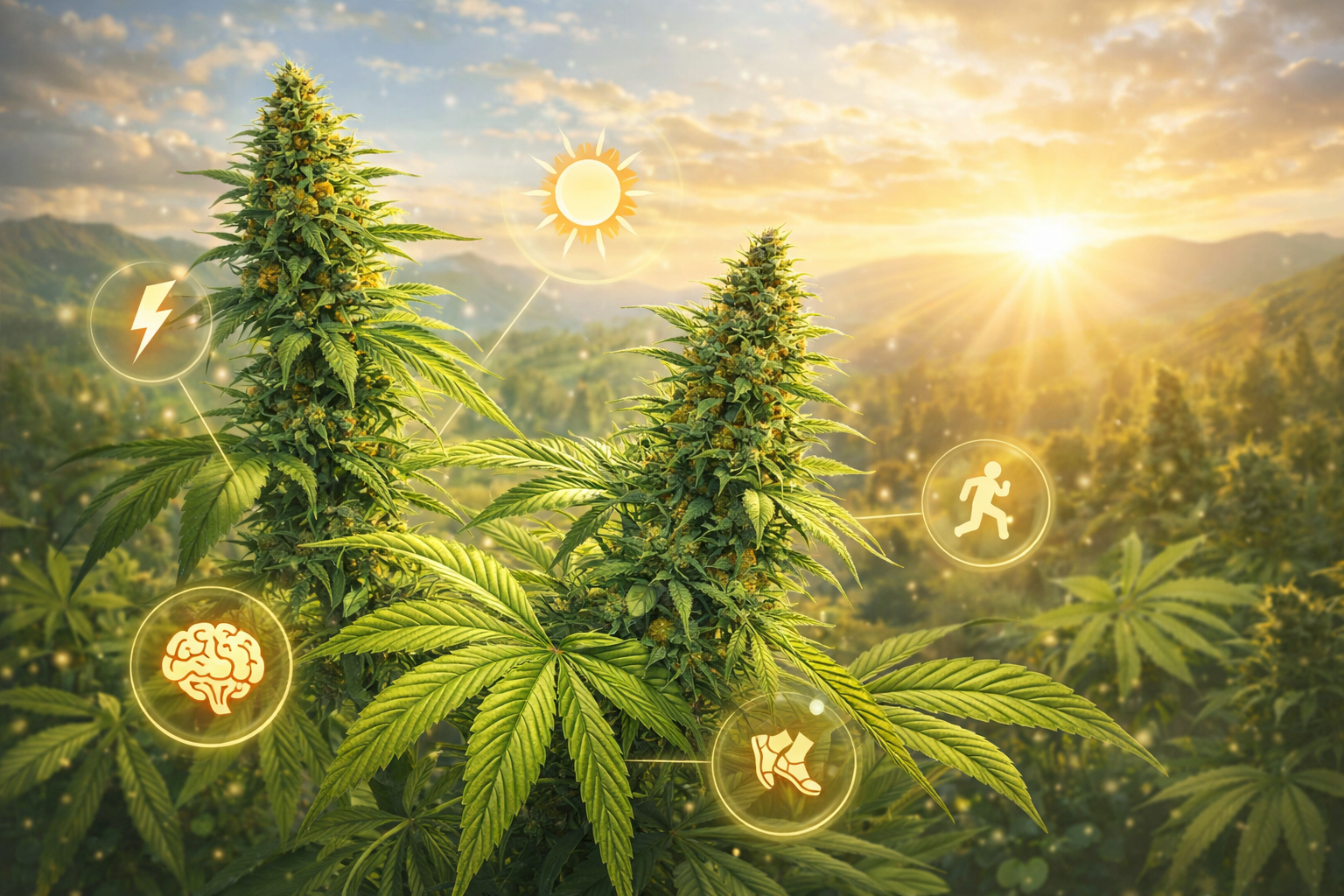
The plant features thin, elongated leaf structures and can reach heights of four meters. This lanky stature contrasts sharply with shorter, bushier cannabis varieties.
Flowers develop with an airy density. This specific structure prevents mold accumulation in humid, tropical environments by allowing maximum airflow between branches.
The foliage typically displays a light green coloration. Wide spacing between branches characterizes its structural silhouette.

Environmental requirements and cultivation cycles
The flowering period extends from sixty to ninety days. This duration requires patience as the plants thrive in high-intensity outdoor light. They mirror their equatorial heritage through this slow maturation.
Vegetative growth is rapid and aggressive. The plant stretches significantly once the light cycle shifts toward the flowering phase.
- Flowering time: 60-90 days
- Height: up to 3-4 meters
- Leaf shape: narrow/slender
- Preferred climate: Tropical/Warm
Mental and Physical Effects of Sativa Strains
Now that we understand how the plant grows, let’s look at how it actually makes you feel and why the “Sativa high” is so famous.
Cognitive stimulation and the cerebral high
Sativa varieties typically impact focus by providing an energizing sensation. These plants spark creative thought processes through mental stimulation. Users often describe this specific experience as a “head high.”
These varieties are preferred for daytime use due to their uplifting nature. They remain popular choices for social settings or demanding artistic projects.
Euphoria defines the subjective feeling. Mental clarity is a highlight.
Sativa vs Indica: Debunking the energy myth
Traditional classifications label Sativa as an “upper” and Indica as a “downer.” This binary is often misleading in practice. Science suggests leaf shape does not dictate pharmacological effect.
The idea that all Sativas are energizing and all Indicas are sedating is a simplified myth that modern science is quickly dismantling.
Individual biology plays a major role. Everyone reacts differently based on their unique endocannabinoid system and metabolism.
Species labels are poor predictors. Focus on chemical makeup.

Managing stimulation and potential anxiety
Rapid thought patterns can negatively affect some users. High stimulation might lead to feelings of anxiety or panic. This profile is not suitable for everyone.
Consulting professionals is necessary for guidance. Choosing the right product requires a clear understanding of your specific wellness needs.
Dosage is a primary factor. Start low for comfort.
Chemical Complexity: Terpenes and Cannabinoids
To truly understand why a plant acts the way it does, we have to go deeper than the name and look at its molecular signature.
Why chemical profiles matter more than labels
Modern science introduces the concept of chemotypes. This moves classification away from visual plant morphology. It focuses on what is actually inside the flower.
The transition toward cannabinoid ratios is essential. THC and CBD levels define the primary experience for the consumer.
Leaf shape is inaccurate. Morphology does not guarantee a specific medical benefit or cheating a saliva test with lemon outcomes.
Dominant terpenes in Sativa leaning varieties
Limonene and pinene significantly influence the plant. These terpenes often contribute to the uplifting and alert sensations. They provide distinct citrus and pine notes.
Terpinolene is also a key compound. This molecule offers a woody aroma. It is frequently found in Sativa-dominant genetics.
These aromatics modulate the high. They work alongside cannabinoids to shape mood.

Synergy through the entourage effect
The interaction between cannabinoids and terpenes is fundamental. This synergy is known as the entourage effect. It suggests that the whole plant works better than isolated compounds. The sum is greater than its parts.
The endocannabinoid system processes these complex synergies. This mechanism helps maintain internal balance or homeostasis, according to this Study on the entourage effect.
Historical Heritage and the Shift to CBD
While history gave us legendary high-THC strains, the modern market is pivoting toward clean, legal CBD options that retain the Sativa spirit.
Legendary landrace and hybrid varieties
Durban Poison is a prime example of pure Sativa landrace genetics. Originating from South Africa, these plants represent the species’ original equatorial power. They offer unique, unmodified botanical profiles.
Hybridization defines the modern era. Most current flowers combine regional genetics to ensure stability and specific growth traits.
Seed preservation is vital. Original landraces provide the genetic foundation for future breeding.

Cultivating Sativa for zero percent THC CBD
Breeders select Sativa lineages to create high CBD flowers. They target a 0.00% THC profile for legal consumption without a high.
Organic agriculture ensures purity. Clean hemp derivatives depend on soil quality and the absence of pesticides for consumer safety.
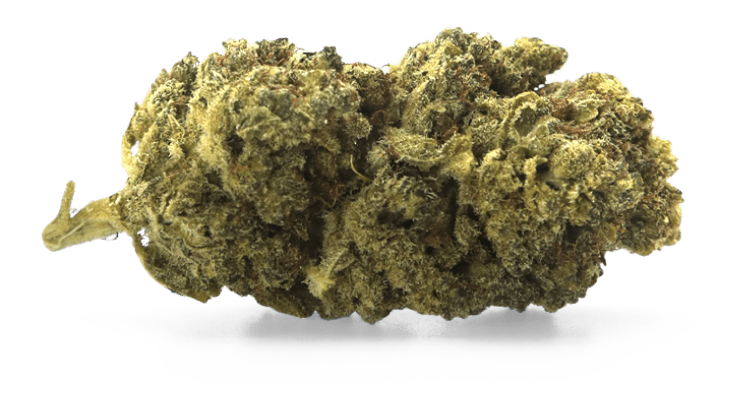
Consumers access legal stimulating products. Options like SUPER LEMON HAZE 50% CBD provide energy while maintaining Sativa characteristics legally.
Legal frameworks and consumer safety
Law distinguishes hemp from marijuana via THC thresholds, focusing on the 0.3% limit. Always verify local regulations before purchasing.
Checking laboratory analyses is a requirement. Third-party testing confirms purity and legal compliance for every batch.
Safety relies on transparency. Verifying your source is the best way to enjoy CBD safely.
| Feature | Sativa (Traditional) | Sativa-Leaning CBD |
|---|---|---|
| THC Content | High | <0.3% |
| Primary Terpenes | Limonene/Pinene | Limonene/Pinene |
| Typical Use | Recreational | Wellness |
| Legal Status | Restricted | Legal |
Recognizing what is sativa involves identifying its tall structure, narrow leaves, and stimulating terpene profiles like limonene. Focus on chemical chemotypes and third-party lab results to ensure safety and legal compliance. Start your wellness journey today with high-quality CBD to experience these uplifting benefits safely.