
The essential takeaway: CBD consumption poses a legal risk for drivers due to potential THC accumulation. While CBD is legal, UK roadside tests target THC with a strict 2 µg/L limit. To protect your license, use 0.00% THC broad-spectrum products or isolates, as even legal trace amounts (0.2-0.3%) can trigger a positive drugalyzer result and permanent record violations.
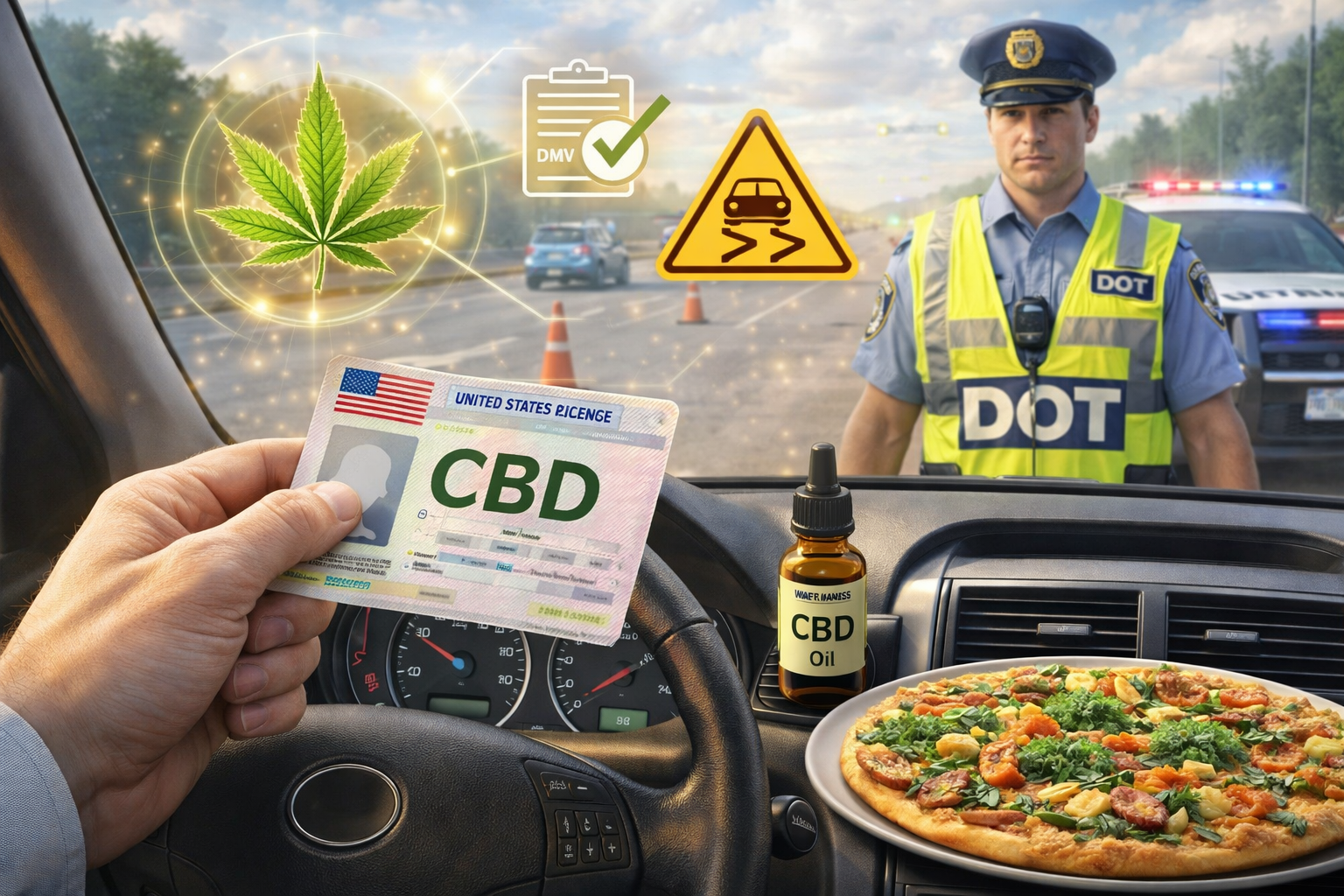
Could a simple wellness routine jeopardize your cbd driving license? While CBD is legal, UK roadside drugalyzers target THC with a strict 2 micrograms per litre limit, meaning even trace amounts from low-quality oils can trigger a positive result and lead to prosecution. This guide explains how to navigate these legal thresholds by identifying 0.00% THC products through rigorous chromatography and laboratory analysis to ensure total professional safety.
- Legal Status of the CBD Driving License Relationship
- Roadside Testing and the Danger of Trace THC
- Step-by-Step Guide to Verifying Product Purity
- Professional Driving and Safety-Sensitive Roles
Legal Status of the CBD Driving License Relationship
Operating a vehicle in the UK requires a clear understanding of how cannabinoid consumption intersects with strict road safety laws and licensing protections.
Understanding the UK Roadside Drug Testing Thresholds
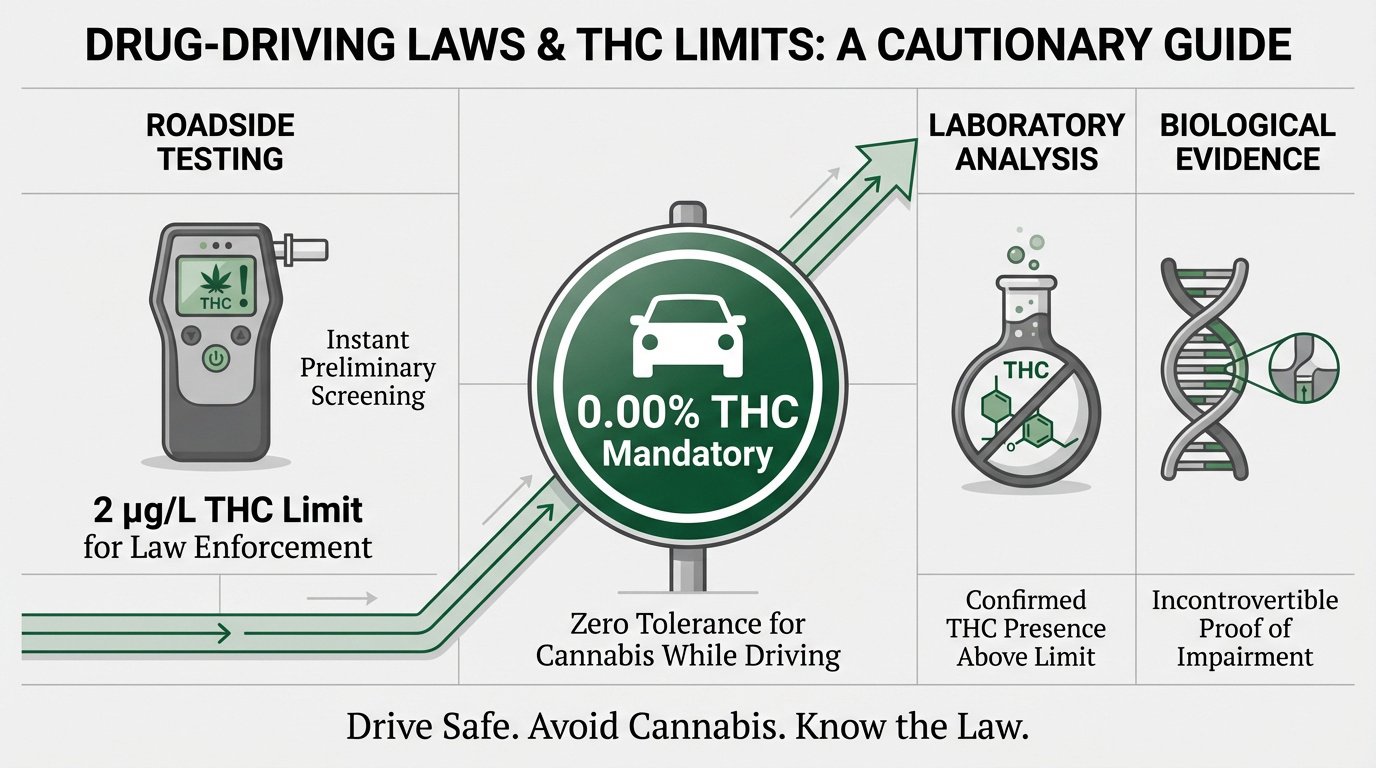
The UK legal limit for Delta-9-tetrahydrocannabinol is 2 micrograms per litre of blood. Police officers utilize mobile drugalyzer devices to detect psychoactive metabolites during roadside stops. These tests identify specific chemical concentrations rather than subjective impairment.
CBD remains a legal substance, yet prohibited cannabis is defined by its THC content. The presence of THC triggers immediate legal consequences under “per se” drug-driving regulations. Motorists face significant risks when using products with unreliable purity levels.
Scientific research highlights the limitations of fixed THC thresholds in predicting actual driver impairment. Current UK enforcement focuses on strict numerical limits rather than clinical sobriety assessments.
Why 0.00% THC Products are Mandatory for Drivers
THC poses an accumulation risk because it is stored in fatty tissues. Regular consumption of products containing even 0.3% THC can lead to a positive blood test over time. This buildup creates a hidden danger for daily commuters.
Broad-spectrum products offer a safer alternative compared to low-quality full-spectrum oils. For license holders, trace amounts of THC are not worth the gamble of a criminal record. Purity is the only protection against roadside testing failure.
Drivers should prioritize laboratory-verified supplements to ensure road legality. You can find high-quality THC-free CBD oil to maintain your wellness routine without risking your driving entitlements.
Roadside Testing and the Danger of Trace THC
Understanding the legal framework is only the first step. The practical reality of how your body processes these compounds and how products are labeled determines your safety on the road.
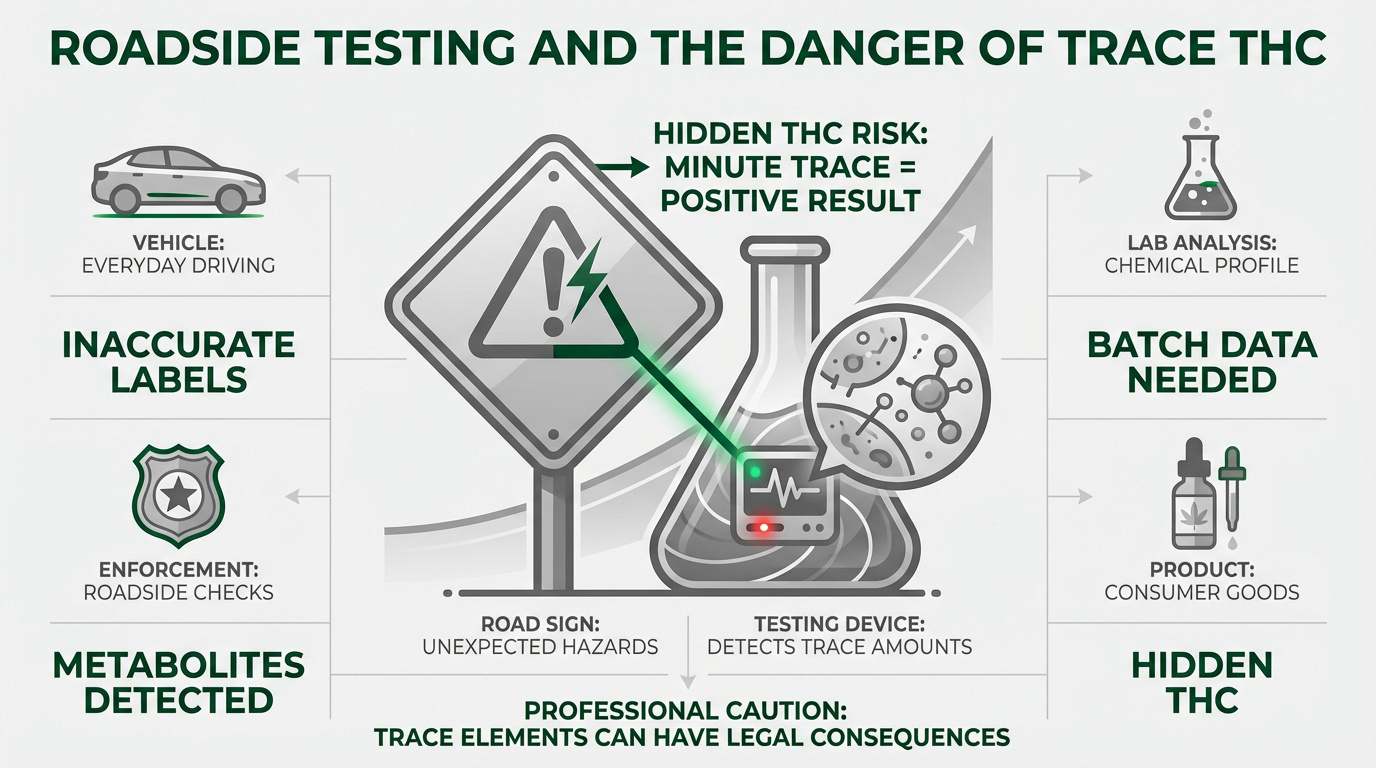
The Problem with Inaccurate Product Labeling
The CBD market currently lacks strict federal oversight. Many products contain higher THC concentrations than their labels suggest. This lack of regulation creates a significant risk for drivers who unknowingly consume “hidden” psychoactive ingredients during their daily routine.
Avoid purchasing any CBD oil without verifying batch-specific laboratory data. Inaccurate marketing remains a major concern, as highlighted by DOT warnings regarding misleading CBD labeling and the potential for positive drug tests.
The FDA does not certify the levels of THC in CBD products, making third-party testing your only real safety net.
How Drug Tests Target Specific Cannabinoid Metabolites
Standard roadside tests do not detect CBD. Instead, they target THC-COOH, a specific metabolite produced when the liver breaks down THC. These detectable markers remain in your system long after the initial consumption of a non-compliant product.
Scientific evidence debunks the myth that CBD converts into THC within the stomach’s acidic environment. This metabolic conversion simply does not happen. An expert analysis confirms that a positive test result stems from actual THC ingestion.
Precise testing methods like GCMS ensure accuracy when identifying these compounds. For a deeper look at botanical differences, consult our guide on understanding the sativa plant and its various chemical profiles.
Step-by-Step Guide to Verifying Product Purity
Since labeling is unreliable, you need to take control by learning how to read the technical data yourself.

Interpreting Laboratory Certificates of Analysis
A Certificate of Analysis (COA) confirms a product meets safety specifications. Check the Limit of Detection (LOD) to ensure THC levels fall below detectable thresholds. Independent third-party labs must issue these documents to guarantee objective results for professional drivers.
The document must display specific identifiers to be valid:
- Batch number matching the bottle
- Date of analysis
- Potency profile for THC/CBD
- Presence of heavy metals or pesticides
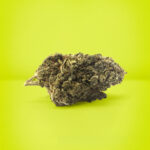
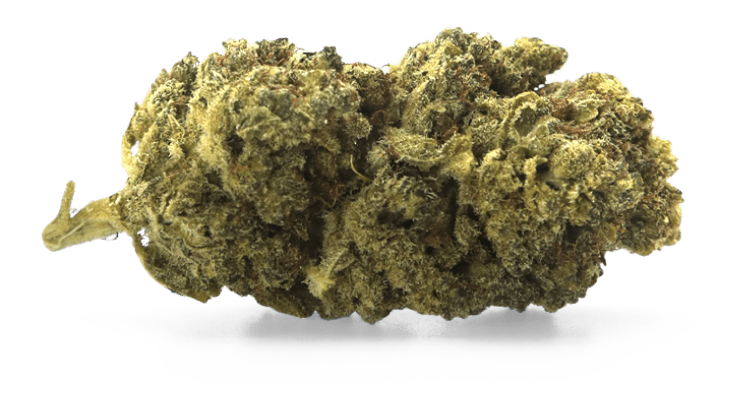
Verifying these metrics ensures safety. You can find premium flowers guaranteed without THC that undergo this rigorous testing process.
The Role of Chromatography in THC Removal
Chromatography is a physical separation technique. It isolates CBD molecules by passing the extract through a stationary medium. This process effectively removes THC, ensuring the final oil complies with strict legal requirements.
Supercritical CO2 extraction provides a clean base. However, achieving a true 0.00% status requires advanced chromatography. This refinement step distinguishes professional-grade isolates from standard hemp extracts that may still contain trace THC amounts.
| Method | THC Removal Efficiency | Purity Level | Best For |
|---|---|---|---|
| Full Spectrum | Low (contains THC) | Up to 0.3% THC | General users |
| Broad Spectrum | High (Chromatography) | 0.00% THC | DOT Drivers |
| CBD Isolate | Maximum (Molecular) | 99%+ Purity | Strict drug testing |
Professional Driving and Safety-Sensitive Roles
For those who drive for a living, the stakes are even higher, as a single mistake can end a career.
DOT Regulations and Commercial License Requirements
The DOT enforces strict drug testing for safety-sensitive roles. Medical Review Officers (MROs) generally reject CBD use as a valid medical excuse for any positive marijuana test result confirmed by laboratories.
The 49 CFR Part 40 regulation prohibits Schedule I substances. Using CBD products with hidden THC levels can lead to serious consequences for employees regulated by the DOT, including immediate removal from safety-sensitive duties.
Any failed test is recorded as a Clearinghouse violation. This permanent mark on your record effectively prevents future employment within the transportation industry.

Best Practices for Maintaining a Clean Driving Record
Maintain a digital log of third-party lab reports for every purchase. This documentation creates a clear paper trail proving your strict commitment to using only 0.00% THC products.
Timing remains a critical factor for safety. Avoid consuming large doses immediately before a shift. This precaution ensures no unexpected physical impairment interferes with your professional driving performance.
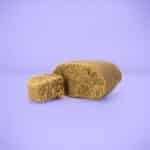
Professional drivers often choose CBD hash certified 0.00% THC to meet these rigorous standards. Selecting verified broad-spectrum options minimizes the risk of accidental THC accumulation.
Protect your driving license by choosing 0.00% THC products verified by independent laboratory analysis. Avoid unreliable labeling risks and ensure your blood levels remain below the 2µg/L limit. Secure your professional future and road safety today by opting for certified THC-free CBD solutions.